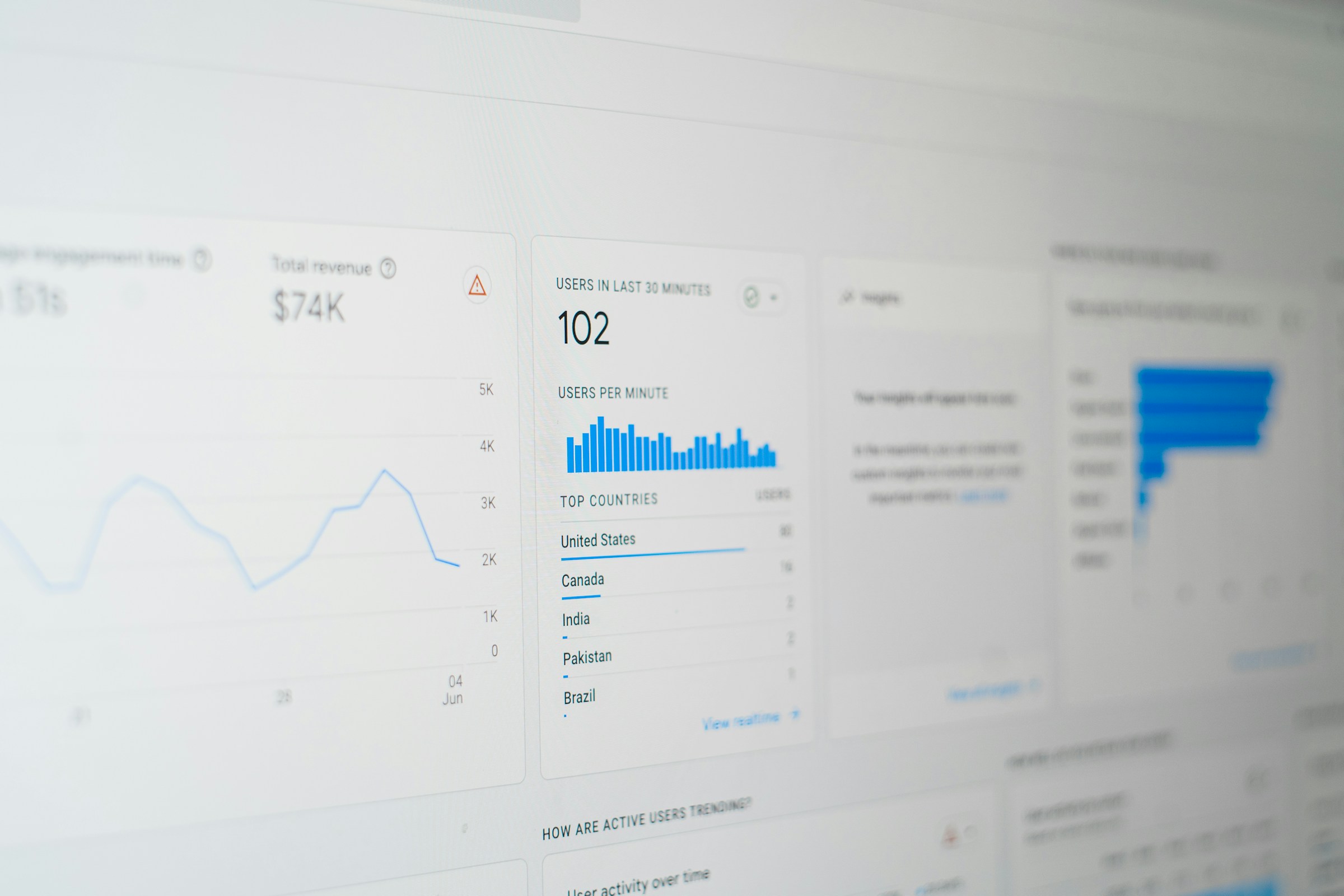
Traffic is expensive in 2026. Every click to your Shopify store costs money, and guessing what converts is no longer sustainable.
A/B testing replaces opinion with proof. It shows you exactly what drives more sales and what quietly kills them.
Small changes often create outsized results. A headline tweak. A different product image. A stronger call to action.
When tested properly, these adjustments can lift conversion rates, increase average order value, and improve profit without increasing ad spend.
In this guide, you’ll find the best Shopify A/B testing apps available right now. We’ll break down features, pricing, strengths, weaknesses, and ideal use cases.
Unsure where to begin? Start with our Shopify apps for better conversions guide and take action.
What Is A/B Testing in Shopify?
A/B testing in Shopify is a controlled experiment where you show two versions of the same element to different groups of visitors to measure which one performs better against a defined goal, usually conversions or revenue.
Version A is your current setup; Version B includes one deliberate change. Traffic is split evenly, and performance is tracked over time.
The difference in results tells you which variation drives stronger outcomes based on actual behavior, not assumptions.
In practical terms, this can mean testing two product page layouts to see which increases add-to-cart rate, comparing different price points to measure impact on revenue per visitor, rewriting a headline to improve engagement, adjusting checkout flow to reduce abandonment, or experimenting with CTA button text such as “Buy Now” versus “Get Yours Today” to increase clicks.
Each test isolates a variable so you can clearly attribute performance changes to that specific adjustment.
Data-driven decisions consistently outperform guesswork because customer behavior often contradicts intuition; what feels persuasive internally may not resonate externally.
A/B testing removes bias, quantifies impact, and protects margin by ensuring that every design, pricing, or messaging decision is validated before full rollout.
Instead of relying on opinions in meetings, you rely on statistically meaningful results tied directly to business metrics.
Why Shopify Store Owners Need A/B Testing Apps
Increase Conversion Rate
Conversion rate is the clearest measure of how efficiently your store turns visitors into buyers.
If 2 out of 100 people purchase, small improvements compound quickly when traffic scales.
A/B testing apps allow you to test specific elements that directly influence buying decisions, such as product descriptions, social proof placement, page layout, trust badges, and call-to-action buttons.
Instead of redesigning an entire page based on opinion, you test one controlled variation and measure the lift.
Over time, these incremental gains stack. A 10% increase in conversion rate can mean significantly higher revenue without spending more on ads.
Improve Average Order Value (AOV)
Revenue growth is not only about more customers; it is also about higher order value per customer.
A/B testing apps help you validate strategies designed to increase AOV, including bundle layouts, volume discounts, cross-sell placements, and free shipping thresholds.
For example, testing whether a “Buy 2, Save 10%” offer outperforms a simple upsell recommendation can reveal which structure drives higher cart totals.
You can also test product page add-ons, subscription incentives, or tiered pricing models.
When measured properly, these experiments show whether customers respond better to perceived savings, convenience, or exclusivity.
The result is higher revenue per visitor, which strengthens margins and allows you to scale acquisition more aggressively.
Reduce Cart Abandonment
Cart abandonment often signals friction, confusion, or lack of trust. A/B testing apps allow you to isolate where the drop-off occurs and test improvements with precision.
This might include testing shorter checkout flows, different shipping cost displays, alternative payment method placements, or clearer return policies.
You can also test urgency messaging, such as low-stock indicators, to determine whether they improve completion rates.
Instead of assuming why customers leave, you measure it.
Reducing abandonment by even a few percentage points can recover substantial lost revenue, especially for stores with consistent traffic.
Optimize Product Pages and Landing Pages
Product and landing pages carry the weight of persuasion. Every headline, image, benefit statement, and testimonial influences the buying decision.
A/B testing enables you to refine these components methodically.
You can test hero images to see which better communicates value, compare long-form versus short-form descriptions, or adjust the order of benefits to improve clarity.
On paid traffic landing pages, you can test alignment between ad messaging and page copy to increase relevance and quality scores.
Test Offers, Bundles, Upsells, and Pricing
Pricing and offers are among the most powerful levers in e-commerce, yet they are often set once and left unchanged. A/B testing apps allow you to experiment responsibly.
You can test price points, limited-time discounts, bundle combinations, subscription incentives, and post-purchase upsells without committing store-wide.
The data shows whether customers are price-sensitive, value-driven, or convenience-focused. It also reveals which combinations increase total revenue rather than just unit sales.
When structured correctly, these tests protect profitability while identifying scalable growth opportunities.
Key Features to Look for in a Shopify A/B Testing App
Visual Editor (No Coding Required)
- Drag-and-drop interface to modify pages without developer help
- Edit headlines, images, buttons, and layouts directly on the page
- Faster test setup and reduced reliance on technical teams
Split URL Testing
- Compare two completely different URLs against each other
- Ideal for testing full landing page redesigns
- Provides a clear performance comparison at the page level
Multivariate Testing
- Test multiple elements at the same time (e.g., headline + CTA + image)
- Identifies the best-performing combination of changes
- Best suited for stores with higher traffic volumes
Advanced Targeting (Device, Location, Traffic Source)
- Run tests for specific visitor segments only
- Optimize separately for mobile vs desktop users
- Personalize experiments based on traffic channel or geography
Real-Time Analytics & Reporting
- Track conversions, revenue, and engagement instantly
- View statistical significance without manual calculations
- Make faster decisions backed by live performance data
Easy Integration with Shopify & Other Apps
- Seamless connection with Shopify themes and checkout
- Compatible with email tools, upsell apps, and analytics platforms
- Reduces setup friction and technical conflicts
Speed & Performance Impact
- Lightweight scripts that do not slow down your store
- Minimal impact on page load time
- Protects user experience while running experiments
Best Shopify A/B Testing Apps (Detailed Reviews)
1. Shogun
Overview:
Shogun is a Shopify-focused A/B testing solution that lets merchants run experiments on pages, templates, and pricing without leaving the Shopify environment.
Key features
- Test both individual elements and full pages across your Shopify theme.
- Segment tests by audience traits like device type or traffic source.
- Test changes to pricing and layout beyond simple copy tweaks.
Pricing
- Pricing varies by plan; merchants typically view options after starting a demo or exploring the app dashboard.
Pros
- Built specifically for Shopify storefronts.
- Supports both small tweaks and larger template changes.
- Offers segmentation options that improve experiment relevance.
Cons
- Pricing isn’t fully transparent up front.
- Smaller stores may need time to reach statistical significance.
Best for:
Stores that need a native Shopify solution and want both page and price testing without heavy technical work.
2. Convert Experiences
Overview:
Convert Experiences is a robust A/B testing platform used by merchants who need advanced experimentation beyond basic split testing.
Key features
- Supports classic A/B, multivariate, and split-URL testing.
- Strong focus on privacy and minimal flicker during experiments.
- Integrates with Shopify to control experiments holistically.
Pricing
- Tiered plans available; typically positioned as an affordable enterprise alternative.
Pros
- Proven testing engine with depth across experiment types.
- Helpful for merchants migrating from tools like Google Optimize.
Cons
- More features can mean a learning curve.
- Higher costs when scaling advanced usage.
Best for:
Mid-sized to enterprise merchants or agencies seeking powerful, privacy-focused experimentation.
3. Neat A/B Testing
Overview:
Neat A/B Testing is a user-friendly Shopify app focused on straightforward experiments for product pages, pricing, images, and homepages.
Key features
- A/B tests for pricing options, layout variations, product images, and copy.
- Simple, Shopify-aligned user experience that doesn’t require extensive setup.
Pricing
- Entry tier is budget-friendly with a free trial period; additional plans vary based on usage and features.
Pros
- Affordable and easy to start for small stores.
- Makes basic experiments accessible without technical work.
Cons
- Less advanced targeting and segmentation compared to enterprise tools.
- Limited multivariate capabilities.
Best for:
Small to mid-sized Shopify merchants who need simple, fast testing without complexity.
4. Intelligems
Overview:
Intelligems centers on experiments that influence revenue directly, with a strong focus on testing pricing, offers, bundles, and shipping experiments.
Key features
- Tests multiple pricing points and promotional offers.
- Bundle and shipping rule experiments with profit-focused reporting.
- Designed to measure revenue impact — not just conversion rate.
Pricing
- Scales with volume and feature needs; options vary based on store size and goals.
Pros
- Built for meaningful levers like pricing and bundles that affect profit.
- Offers deep reporting tied to revenue outcomes.
Cons
- More specialized — not ideal if you only need landing page visual tests.
- Requires understanding of revenue metrics alongside conversion goals.
Best for:
Merchants focused on optimized pricing strategies, bundled offers, and profit-driven experimentation.
Quick Guidance — How to Choose
- Shopify-native and easy setup: Shogun or Neat A/B Testing.
- Advanced or enterprise experiments: Convert Experiences or similar enterprise tools.
- Revenue and pricing focus: Intelligems.
How to Choose the Right A/B Testing App for Your Store
Based on Budget
Your budget determines how sophisticated your experimentation can be.
Entry-level apps are suitable if you need straightforward split tests on product pages or pricing and want predictable monthly costs.
Higher-tier platforms justify their price when they unlock deeper segmentation, multivariate testing, and revenue-level reporting.
The key question is simple: Will the tool generate more profit than it costs? If your store generates consistent sales, even a small conversion lift can cover the subscription fee quickly.
However, if traffic and revenue are still low, an expensive enterprise platform will delay return on investment.
Start where your current revenue supports experimentation without financial strain, then upgrade when your test velocity and complexity demand it.
Based on Traffic Volume
Traffic volume determines whether your tests will reach statistical significance in a reasonable timeframe.
Low-traffic stores should prioritize simple A/B tests with clear, high-impact variables such as pricing or headline changes.
Multivariate testing requires larger visitor numbers because traffic is divided across more variations.
If you receive only a few hundred visitors per week, advanced tools will not produce reliable results fast enough.
On the other hand, stores with strong paid traffic or high organic flow can leverage sophisticated testing frameworks to optimize multiple elements simultaneously.
Choose a tool aligned with how much data your store can realistically generate. Testing without sufficient traffic leads to misleading conclusions.
Based on Technical Skill Level
Some apps are designed for marketers. Others assume developer involvement.
If you do not have technical support, prioritize tools with visual editors and native Shopify integrations. This reduces setup time and prevents theme conflicts.
More advanced platforms offer deeper customization but may require code snippets, tracking configurations, or analytics integration.
Complexity is not inherently better. The right tool is the one your team can operate consistently.
A simple platform used regularly will outperform a powerful system that sits unused due to technical friction.
Based on Growth Stage (Beginner vs Scaling Store)
Your growth stage should guide your experimentation depth. Beginners need clarity and focus. Start with core metrics such as conversion rate and average order value.
Run controlled tests on high-impact pages like product and checkout flows.
As the store scales, experimentation should expand beyond cosmetic changes into pricing strategy, bundle structures, shipping thresholds, and segmented targeting.
Scaling brands benefit from tools that measure revenue per visitor and profit impact, not just conversion lift.
In the early stages, the goal is learning what works. In scaling stages, the goal is to maximize efficiency at volume. Your A/B testing app should evolve with that shift.
Step-by-Step: How to Run Your First A/B Test on Shopify
1. Choose a Clear Goal
Start with one primary metric. Not two. Not five.
Decide whether you are optimizing for conversion rate, average order value (AOV), revenue per visitor, or checkout completion rate.
Your goal determines what you test and how you measure success. If your traffic is steady but sales are low, focus on conversion rate.
If conversions are healthy but revenue feels flat, target AOV. Every test must tie directly to a measurable business outcome. Without a defined goal, results become noise.
2. Form a Strong Hypothesis
A hypothesis connects a problem to a proposed solution. It should follow a simple structure:
“If we change ___, then ___ will improve because ___.”
For example: “If we move customer reviews above the fold, conversion rate will increase because visitors will see social proof earlier.”
This forces clarity. You are not testing randomly. You are testing a reasoned assumption tied to user behavior.
Strong hypotheses increase the quality of your experiments and reduce wasted cycles.
3. Create a Single Controlled Variation
Change one meaningful variable at a time.
If you test a new headline, do not also change the CTA and pricing. When multiple elements change at once, you cannot isolate the true driver of performance.
Keep the variation focused and deliberate.
Use your A/B testing app to split traffic evenly between Version A (control) and Version B (variation). Maintain consistency in all other conditions.
Precision here protects your data integrity.
4. Run the Test Long Enough for Statistical Significance
Ending tests early is one of the most common mistakes. Early results are often misleading.
Allow enough time for meaningful traffic to pass through both versions. This usually means at least one to two full business cycles.
Many tools provide statistical confidence indicators — use them. A test should reach a strong confidence threshold before you make decisions.
Patience protects profitability. Acting on incomplete data creates false winners.
5. Analyze Results Beyond Surface Metrics
Look past the raw conversion rate.
Examine revenue per visitor, average order value, and potential impact on margin. A variation that increases conversions but lowers order value may not improve profit.
Review behavior flow, bounce rate shifts, and segment-level performance if available.
Data should guide the decision, not ego.
6. Implement the Winner and Document the Insight
Once statistical confidence is reached, deploy the winning variation across your store.
Then document what you learned. Record the hypothesis, the change made, the duration of the test, and the final results.
This builds an internal testing knowledge base. Over time, these insights compound and inform smarter future experiments.
Testing is not a one-time tactic. It is a repeatable growth system.
Common A/B Testing Mistakes to Avoid
Testing Too Many Variables at Once
When you change multiple elements in a single test, you lose clarity. If the headline, image, CTA, and pricing all change together, you cannot determine which variable drove the result.
This creates confusion and weakens decision-making. Controlled experimentation requires isolation. One meaningful change per test produces clean data and actionable insights.
If you want to test combinations, use multivariate testing only when traffic volume supports it. Otherwise, keep experiments focused and sequential.
Ending Tests Too Early
Early results often look decisive, but they rarely are.
Small data samples can produce dramatic swings that stabilize over time. Ending a test after a few days because one version “looks better” leads to false positives.
A proper test must run long enough to capture consistent behavior across different days and traffic patterns. Allow full business cycles to pass.
Use your testing tool’s confidence metrics as a guide, not your emotions.
Ignoring Statistical Significance
Statistical significance is not optional. It is the difference between a real improvement and a random fluctuation.
If your test does not reach a strong confidence threshold, the outcome is uncertain.
Implementing a “winner” without sufficient data can reduce performance instead of improving it.
Focus on sample size, conversion counts, and confidence levels before making changes permanent.
Data must meet a minimum standard of reliability. Anything less introduces risk.
Not Tracking Enough Traffic
Traffic volume determines test validity.
If your store receives limited visitors, dividing them across multiple variations slows results and weakens conclusions.
Low traffic makes small performance differences appear larger than they are. In these cases, prioritize high-impact tests and run them longer.
Consider consolidating traffic instead of spreading it thin.
Without sufficient exposure, your experiment cannot produce trustworthy insights.
Over-Testing Small Stores
Testing is powerful, but overuse can create noise.
Small stores with limited traffic should not run constant simultaneous experiments.
Too many active tests can interfere with each other and distort data.
Instead, focus on foundational improvements first — clear product positioning, strong visuals, competitive pricing, and smooth checkout flow.
Once baseline performance is stable, introduce structured testing gradually.
Final Thoughts
A/B testing is no longer optional for serious Shopify growth. Traffic costs money, and every decision should be backed by data.
Structured experimentation protects profit, improves conversion efficiency, and removes guesswork from scaling.
Start simple. Test high-impact elements first. Stay disciplined with your data, and document what you learn.
Consistent experimentation compounds over time and turns incremental gains into meaningful revenue growth.
If you want a strong Shopify-native solution, Shogun is a solid overall choice. For budget-friendly testing, Neat A/B Testing is practical and accessible.
For advanced experimentation and deeper optimization, Convert Experiences or Intelligems provide the most powerful capabilities.
The right tool is the one that fits your traffic, your team, and your growth stage, and that you will use consistently.
For a curated list of tools, check out our best Shopify conversion rate apps and improve your results.
FAQs
What is a good A/B testing conversion lift?
A 5–15% lift is strong for most Shopify stores. Even a 3% improvement can be meaningful at scale.
Do A/B testing apps slow down Shopify stores?
Well-built apps use lightweight scripts with minimal impact. Poorly configured tests can affect speed, so choose reputable tools.
Can I run A/B tests without Shopify Plus?
Yes. Most A/B testing apps work on standard Shopify plans. Shopify Plus is not required for storefront testing.
How much traffic do I need to run A/B tests?
You need enough traffic to reach statistical significance. As a baseline, aim for at least several hundred conversions per variation for reliable results.
Is A/B testing worth it for small stores?
Yes, but focus on high-impact tests and run them longer. Keep experiments simple until traffic grows.





Hi, I’m Ethan Caldwell. After transitioning from IT into eCommerce in 2017, I’ve spent the last 9 years building and optimizing Shopify stores. I focus on conversion rate optimization, breaking down what actually improves conversions into clear, practical insights.